
Blog / Toronto
Toronto's Most Reported Water and Sewer Problems in 2026
Every time someone in Toronto calls 311 about a blocked sewer, a leaking water line, or a sudden drop in water pressure, the city logs it. Toronto publishes those requests as open data. It is a public record, but it comes as a spreadsheet of hundreds of thousands of rows, so almost nobody looks at it.
We went through the 2026 file to answer a simple question: what water and sewer problems are Toronto residents actually reporting, and where?
The file covers requests created from January 1 to August 31, 2026. In that time, the city published 372,859 customer-initiated 311 requests. Of those, 29,867 were sent to Toronto Water.
The most reported problem is a blocked sewer line
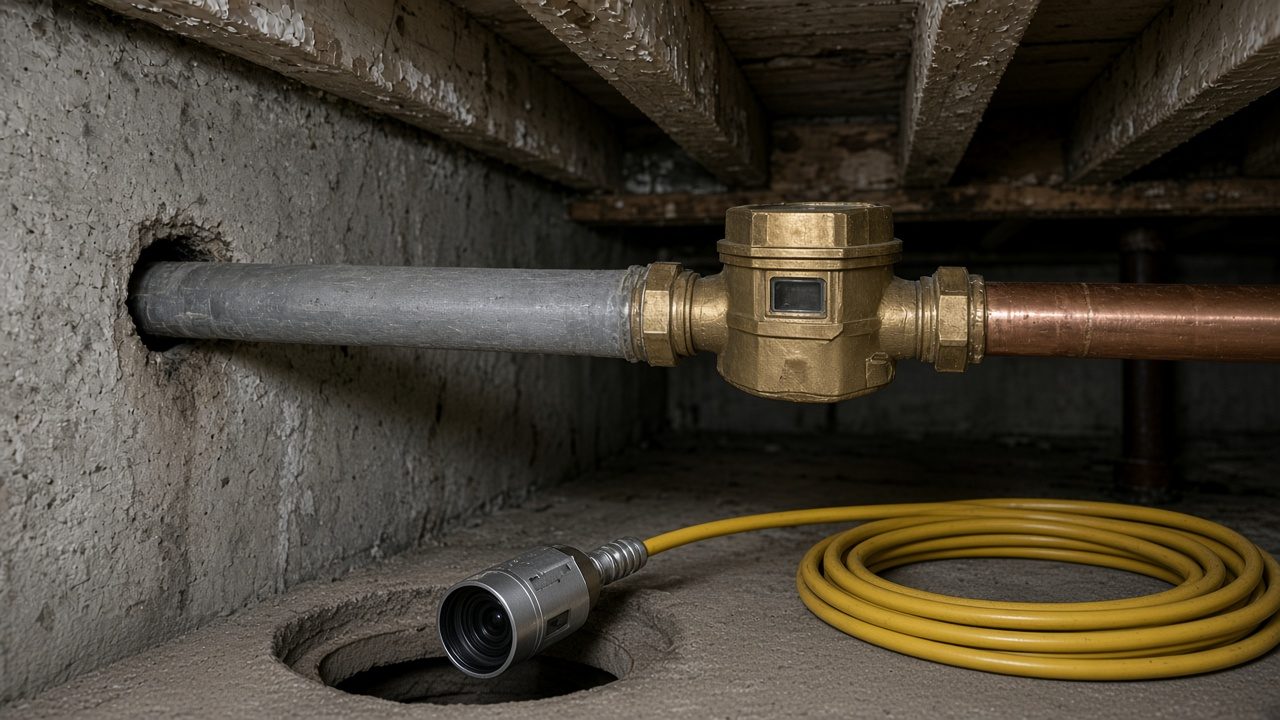
The single most common Toronto Water request was "Sewer Service Line - Blocked," with 4,885 reports. That is the pipe carrying waste from a house out to the city sewer. When it clogs, residents usually notice slow drains, gurgling, or water backing up through a basement floor drain. A sewer camera inspection is how you see whether the blockage is in the line, and drain cleaning is what clears it.
Here are the water and sewer problems residents reported most often:
| Request type | Reports |
|---|---|
| Blocked sewer service line | 4,885 |
| No water at the property | 1,690 |
| Leaking water service line | 1,679 |
| Possible watermain break | 1,471 |
| Water service turned off or burst | 1,255 |
| Low water pressure or low flow | 1,170 |
| Sinkhole | 1,063 |
| Overflowing storm catch basin | 730 |
| Water meter with a strong leak or burst | 560 |
| Lead water pipe record search | 376 |
| Sewer odour | 352 |
| Discoloured, rusty, or dirty water | 348 |
| Sewer main backup | 68 |
The low-pressure figure combines three request types the city keeps separate: sudden low pressure, ongoing low pressure, and ongoing low pressure at non-residential properties. If the weak flow is only in your house, see low water pressure repair in Toronto.
The rest of the Toronto Water requests were mostly routine or administrative, such as asking the city to turn water service on or off, checking a water service box, requesting a service card, or filing a complaint about timing or process.
The problems change with the seasons
The monthly numbers were the most useful part of the data. Different problems peak at different times of year.
Blocked sewer lines stayed high all year. They never dropped below 543 a month, and they peaked in March with 683. There is no season when they stop being a problem.
Possible watermain breaks were a winter problem. There were 368 reports in January and 447 in February, then the number fell to 172 in March and 73 in August. Cold weather is hard on underground pipes, and the numbers follow that. A leak on the private side of that pipe is a water line repair, not a city watermain job.
Leaking water service lines followed a similar pattern. They jumped from 194 in January to 368 in February, then settled at around 200 a month for the rest of the spring and summer.
Overflowing catch basins barely showed up in the winter, with 23 in January and 31 in February. Then they jumped to 148 in March and 152 in April, which is when snowmelt and spring rain arrive at the same time. That is also when basement floor drains are under the most strain. If water is already coming in, basement leak repair is the private-side problem to look at.
Low water pressure went the other way. Reports rose from 108 in January to 196 in June and 197 in July, when demand for water is higher.
For homeowners, this is a practical guide. February is when leaks on the pipe coming into the house are most likely to show up. March and April are when street drains and basements are under the most strain. Summer is when a weak shower or tap is most likely to get noticed.
Where the reports come from
We grouped the request types most closely tied to the pipes and drains serving a home: blocked sewer lines, no water, leaking or burst service lines, low pressure, water meter leaks, sewer odour, cleanout repairs, sewer main backups, discoloured water, leaking service valves, and lead pipe record searches.
These wards reported the most of those problems from January to August 2026:
| Ward | Reports |
|---|---|
| Toronto-Danforth (Ward 14) | 1,065 |
| Etobicoke-Lakeshore (Ward 3) | 852 |
| Davenport (Ward 9) | 837 |
| Beaches-East York (Ward 19) | 780 |
| York South-Weston (Ward 5) | 769 |
| Scarborough Southwest (Ward 20) | 737 |
| Eglinton-Lawrence (Ward 8) | 676 |
| Parkdale-High Park (Ward 4) | 589 |
The wards with the fewest were Scarborough-Agincourt (175), Scarborough North (193), Don Valley East (226), Don Valley North (236), and Spadina-Fort York (240).
Looking at each problem on its own tells a similar story:
- Blocked sewer lines: Toronto-Danforth had the most with 455, followed by Etobicoke-Lakeshore with 359 and Beaches-East York with 348.
- Leaking water service lines: Davenport had the most with 173, followed by Toronto-Danforth with 131 and York South-Weston with 115.
- No water at the property: Toronto-Danforth had the most with 165, followed by Davenport with 140 and Beaches-East York with 100.
- Possible watermain breaks: Etobicoke-Lakeshore had the most with 127, followed by York Centre with 101 and Etobicoke Centre with 94.
A lot of the high-reporting wards have older detached houses and semis, with water and sewer lines that have been in the ground for a long time. Wards with more condo towers, like Spadina-Fort York and Toronto Centre, reported far fewer. That does not necessarily mean condo plumbing never fails. Condo residents usually call their property manager, not 311, so those problems are less likely to show up in city data.
What this means if you own an older Toronto home
If you live in one of the higher-reporting wards, this data does not mean your pipes are about to fail. It does show that blocked sewer lines and leaking water lines are common, ongoing problems, not rare ones.
A slow drain on the lowest floor of the house, especially if more than one fixture is affected, can be an early sign of a blocked sewer line. It is much cheaper to find that with a camera inspection than after water comes up through the floor drain.
If your water pressure drops suddenly, check with your neighbours first. If their water is also affected, it may be a city issue, and 311 is the right call. If it is only your house, the problem is more likely on the private side of the water line.
If a pipe leaks in February, it deserves quick attention. That is the month when both leaking service lines and watermain break reports were at their highest.
If your home was built before the mid-1950s, it may have a lead water service pipe. In 2026, residents made 376 requests asking the city to search its records for lead pipes. The city also offers free lead testing for eligible homes. See how to check for lead pipes in Toronto.
How to read these numbers
A 311 request means someone reported a problem. It does not always mean the city confirmed a break, a blockage, or a leak. Some reports turn out to be something else, and one problem can lead to more than one call.
The open dataset only includes customer-initiated requests that the city was able to place on its map. It is not every 311 call, and it is not Toronto Water's full repair records.
The counts are not adjusted for population or the number of homes in each ward, so they show where problems were reported most, not the rate per household. About 8 percent of Toronto Water requests were logged at a street intersection instead of a postal code, so we compared wards rather than smaller areas.
The data covers January 1 to August 31, 2026, so it does not include this fall or the winter ahead.
Source: City of Toronto Open Data, 311 Service Requests - Customer Initiated, 2026 file (SR2026), requests created January 1 to August 31, 2026. File last updated September 8, 2026.
Frequently asked questions
What was Toronto's most reported water or sewer problem in 2026?
A blocked sewer service line, with 4,885 reports from January through August. It was well ahead of no-water calls (1,690) and leaking water service lines (1,679).
Which Toronto wards reported the most?
For problems on the pipes serving a home, Toronto-Danforth led with 1,065, then Etobicoke-Lakeshore (852), Davenport (837), and Beaches-East York (780).
When do watermain and leak reports peak?
February. Possible watermain breaks hit 447 that month, compared with 73 in August. Leaking water service lines hit 368 in February, compared with 145 in August.
Does this data include basement flooding?
There is no basement-flooding request type in this file. The closest public counts are blocked sewer service lines, overflowing catch basins (730), and sewer main backups (68).
Should I call 311 or a plumber?
If neighbours on your street have the same sudden problem, start with 311. That pattern fits a city watermain or a shared sewer. If the problem is only in your house, a plumber can check the private water line, the sewer line, or the pressure inside the home.
Related Toronto plumbing pages
- Sewer camera inspection
- Drain cleaning
- Water line repair
- Low water pressure repair in Toronto
- Lead pipes in Toronto and free lead testing
- Plumber in Toronto
Contact us if a drain is backing up, a water line is leaking, or the pressure in your house has dropped.